

The nextnano.NEGF solver#
The nextnano.NEGF tool is designed for accurate quantum simulations of semiconducting devices using the Non-Equilibrium Green Functions (NEGF) formalism. It has been originally developed to simulate electron dynamics and gain in quantum cascade lasers (QCLs) and superlattices. It can also be applied to infrared detectors such as quantum well infrared detectors (QWIPs) and quantum cascade detectors (QCDs), as well as transport in resonant tunneling diodes (RTDs). It is progressively extended to further applications such as interband devices.
Quantum cascade lasers (QCLs)
Quantum cascade detectors (QCDs)
Resonant tunneling diodes (RTDs)
Quantum-well infrared detectors (QWIPs)
Superlattices (SLs)
Type-II superlattices (T2SL)
Interband cascade lasers (ICLs)
The NEGF formalism is a powerful framework to model quantum transport in the presence of scattering processes. The following scattering mechanisms are included:
Longitudinal optical (LO) phonon scattering
Acoustic phonon scattering
Charged impurity scattering
Interface roughness scattering
Alloy scattering
Electron-electron scattering
An example of application is illustrated below with the calculation of current-voltage characteristics in a QCL.
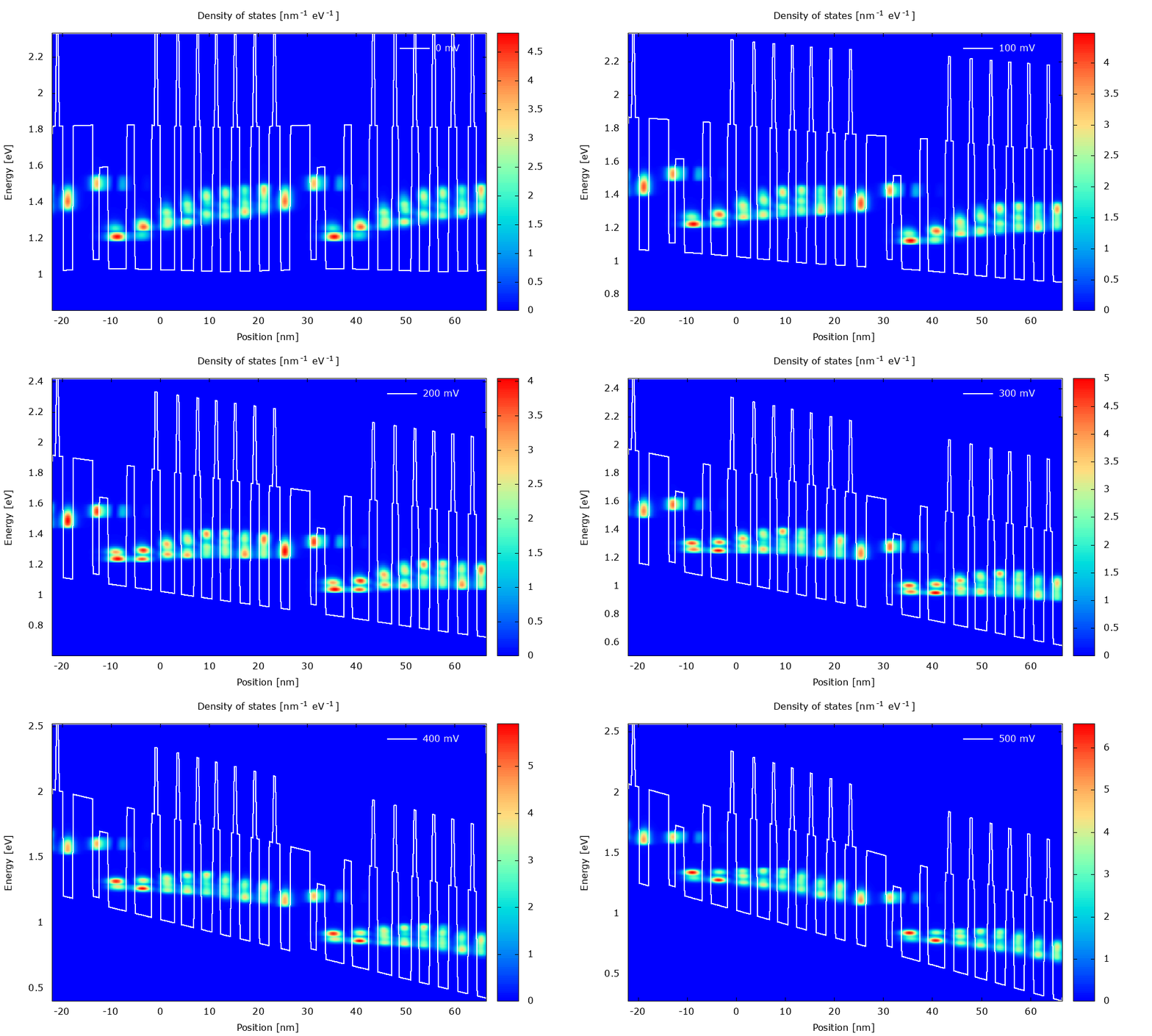
Figure 1 Local density of states in a QCL structure for varying bias.#
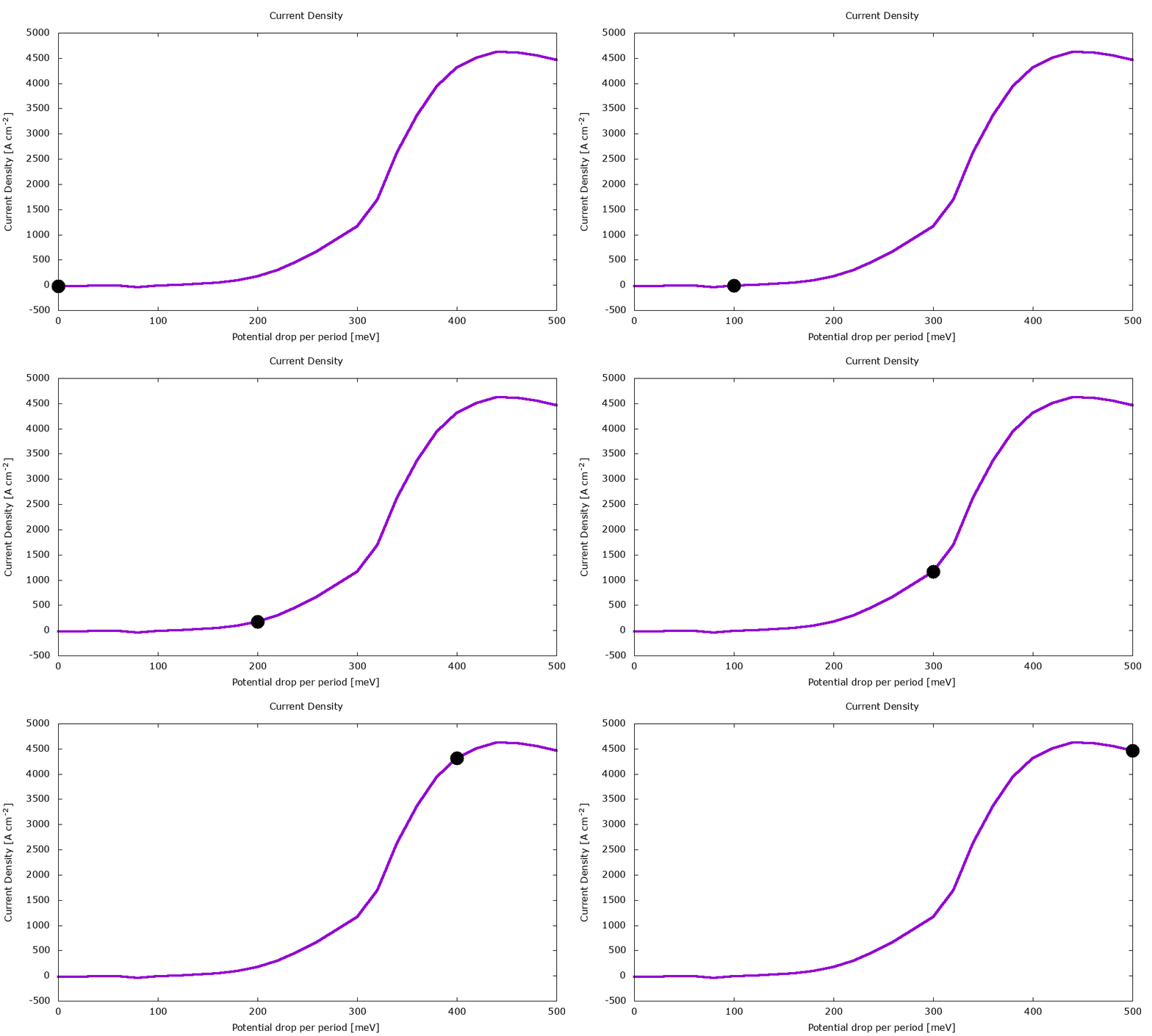
Figure 2 Current-voltage characteristics of the same QCL structure.#
Note
Check out publications by customers to discover quantitative insights to electron dynamics that the software has provided.
Software Lineup#
We offer two versions nextnano.NEGF_classic and nextnano.NEGF. The differences are summarized below:
Version |
nextnano.NEGF_classic (deprecated) |
nextnano.NEGF (recommended) |
|---|---|---|
Source code language |
C# |
C++ |
Supported operating system |
Windows only |
Windows, Linux* |
Development phase |
Concluded in 2023 |
Since 2022 |
Release notes |
Note
(*) Supported Linux distributions are: Red hat Enterprise Linux 8.10, 9.7, 10.1 and Ubuntu 24.04.04. If an executable for macOS is needed, please let us know.
This documentation describes the new C++ version, which is now the recommended version and includes the latest developed features.
Note
The technical part of the documentation is currently being updated and migrated to here from our old documentation
Getting Started#
Getting Started