About
The nextnano Software in a nutshell
The nextnano software is the simulation software for the next generation of nano devices. It allows modelling electronic and optoelectronic semiconductor nanodevices. It is characterized by:
|
|
|

Figure 1 Applications of the nextnano software
The nextnano software is typically used for research purposes, in most cases for structures containing quantum wells. However, it can also be used for other types of structures, such as quantum wires, quantum dots, more complicated quantum structures, structures based on p-n junctions, 2-dimensional gases, and many more.
The nextnano software license includes access to hundreds of maintained example input files as well as tutorials featuring state-of-the-art physics and publications in semiconductor and quantum science. Easily adapt an example file to your device’s geometry to get started with your digital twin without high initial training effort.
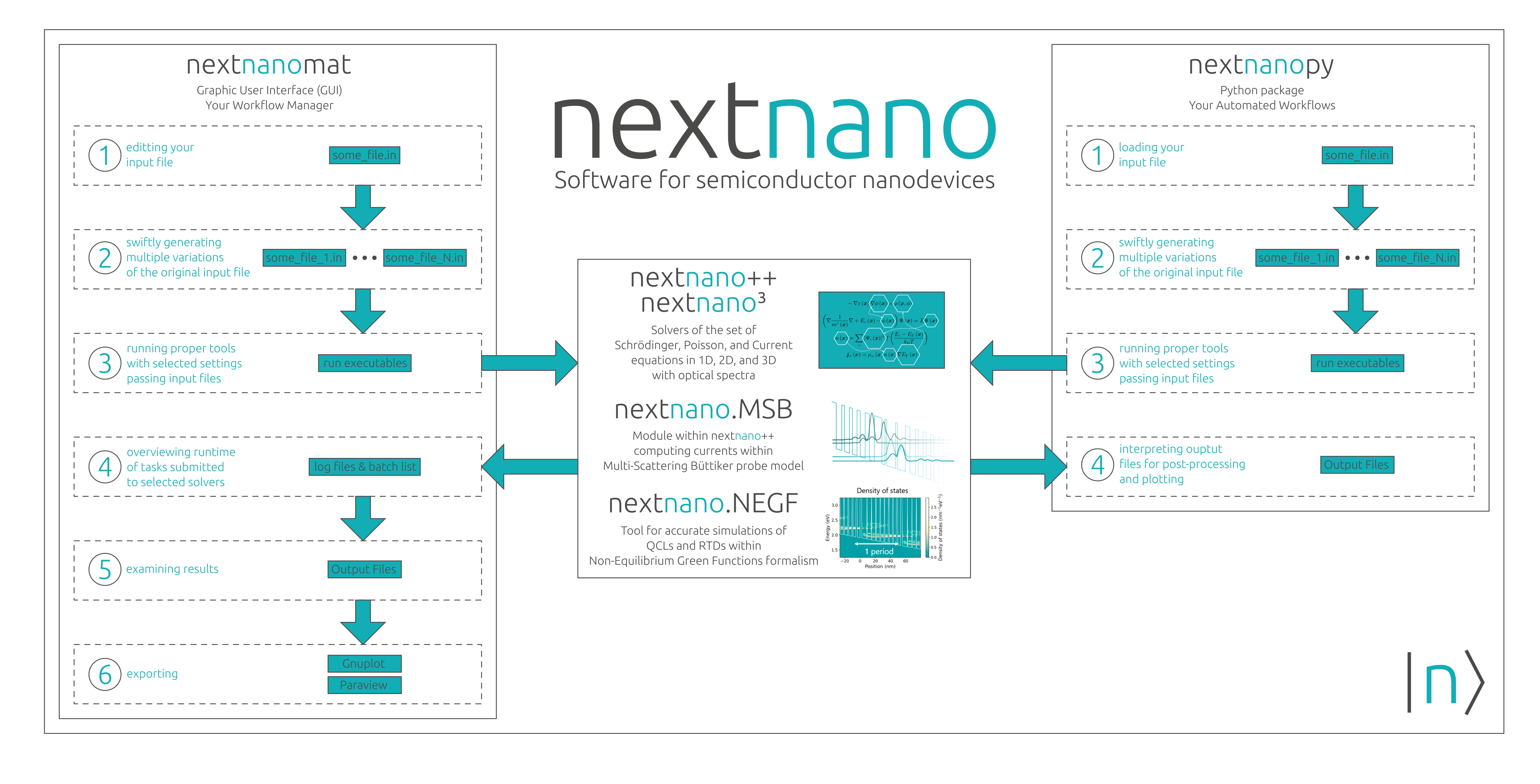
Figure 2 Structure and typical workflow of the nextnano software
The nextnano software consists of multiple tools aiming to provide you with the best experience while modeling your structures or devices. The tools nextnano++, nextnano³, nextnano.MSB, and nextnano.NEGF are our engines of the nextnano software, solving sets of specified equations self-consistently and computing desired results. These tools require an input file specifying the structure, models and output data of interest. The graphical user interface nextnanomat is our workflow manager for Windows, which guides you seamlessly through the entire process of modeling. For those who are looking for an alternative workflow manager for the purpose of automated simulation processes, we provide and maintain an open source Python package nextnanopy.
System requirements
Operating system: Our tools are mainly developed for Windows, but we also support macOS and certain Linux distributions. Still, not all of the nextnano software tools or license formats are available on every operating system. For more information about that, please refer to nextnano tool and license format availability on different operating systems.
We are continuously working to expand native support across additional operating systems. For currently available software packages by operating system, visit our download site.
CPU: Simulations can be CPU-intensive, so multi-core CPUs are advised, however, the software will also run on a single core. Our tools are mainly compiled for Intel processors. We are continuously working to expand native support across additional operating systems and processors. For information about currently available software packages, visit our download site.
Disk space: One needs around 1.5 GB of free disk space to install all our tools. The volume varies depending on the type of package and release.
Software dependencies: When working on Windows using nextnanomat, one also needs to have Latest Microsoft Visual C++ Redistributable installed; Additionally the .NET Desktop Runtime is needed, if not present a pop-up should appear at first program start specifying the version needed. Optionally, one can install gnuplot, ParaView, or Python to take advantage of workflow integrations with these tool.
Accessibility Statement
The accessibility statement and evaluation report for the nextnano software can be downloaded using the links below:
Last update: 29/01/2026